Browse Items (515 total)
Since 1993 Quaker meetings have been held in a Victorian house on Howard Place. The Society of Friends occupy the lower two storeys of the house, with…
In the 1930s the Christian Brethren leased a cottage on Greenside Place. This was subsequently converted into a hall for worship. The Christian…
A Congregational church was built on the north side of Market Street in 1807. The church had seating for 320 people. There were two entrances from the…
During the mid-nineteenth century a Congregational church was built on the east side of Bell Street. It was substantial Victorian stone building…
St Andrews Castle was once the home of the bishops of St Andrews. There seems to have been a castle on this site since at least the 1190s. We do not…
In 1774 the Burgher congregation in St Andrews moved to a building in a yard on the north side of South Street. This property still exists and is now…
During the 1730s a section of the Church of Scotland was unhappy with how ministers were appointed and the allocation of religious wealth. They formed…
The Dominican order (or black friars) arrived in St Andrews during the fifteenth century. There are references to a Dominican place or house in St…
 St Andrews’ Dominican friary shortly after the Reformation. (Source: John Geddy, ‘S. Andrew sive Andreapolis Scotiae Universitas Metropolitana’. NLS, MS.20996. Available at: http://maps.nls.uk/towns/rec/215)
There has been a Baptist church on South Street since the early 1840s. When the original church opened it had seating for 250 people. The main space…
 The original Baptist chapel on a mid-nineteenth-century map. (Source: 1854 Ordnance Survey Map of St Andrews. Available at: https://maps.nls.uk/view/74416778)
 Walter Bower describes life at St Andrews Cathedral Priory in the late Middle Ages. (Read by Professor Michael Brown.)
St Andrews Cathedral was once the most important church in Scotland. It was the base for the country’s senior bishopric and housed the relics of…
 A video showing how St Andrews Cathedral may have appeared in 1318. (Source: Open Virtual Worlds / Smart History)
 Point of Interest Key
 Interior of All Saints’ Church in about 1920. (Source: University of St Andrews Library, GMC-F-94.)
All Saints’ Church originally served the St Andrews fishing community (which was traditionally focused around the east end of town). In 1903 a small…
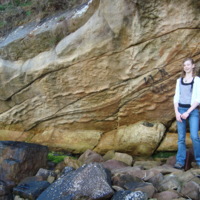 Arthropleura Tracks, St Andrews
Arthropleura tracks near St Andrews, a cast of them can be seen in MUSA, the Scores, St Andrews
 Channel, Roome Bay
Channel cut into Carboniferous sandstones at Roome Bay, Crail
The Tolbooth built in 1598 and tower, rebuilt in 1776 contain well cut blocks of both local sandstone (buff-coloured) and material from Locharbriggs…
 Tollbooth tower, Crail
Tollbooth Tower, Crail
 Memorial Fountain, Crail
The Memorial Fountain was built in 1897 and is dedicated to Queen Victoria’s Diamond Jubilee. It is built of both grey and red granite.
 Tollbooth, Crail
The Tolbooth built in 1598 and tower, rebuilt in 1776 contain well cut blocks of both local sandstone (buff-coloured) and material from Locharbriggs…
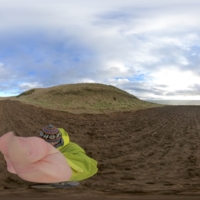 Photosphere of Kingcraig
Raised beach platforms at Kingcraig, nr. Elie, Fife
 Admiralty North East
 Cellardyke Rose
This bay doesn’t actually have rubies, it’s named after the tiny red garnets in the sand which look a bit like rubies to the untrained eye. You might…
This area between Kinghorn and Kirkcaldy has some pillow basalts as well as fossilised corals and crinoids.
 Kinghorn to Kirkcaldy Geological Trail
A walking trail to see the Geology between Kinghorn and Kirkcaldy.
St Monans has a number of fossils including corals and also a coal seam. The rocks here have been folded and tilted since they were deposited.
 St Monans Geological Trail
A walking trail to see the Geology of St Monans.
At Wormit there is a wide variety of geology including lava flows, river conglomerates, intrusive rhyolite and glacial erratics.
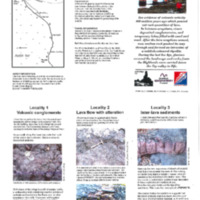 Wormit Geological Trail
A walking trail to see the geology of Wormit.
 Rock and Spindle overvivew
Overview of Kinkell Ness with Rock and Spindle
 Cellardyke Rose model
Deformation structure within the Carboniferous sandstones at Cellardyke, Fife
 Cellardyke Rose
Deformation feature in Carboniferous sandstones near Cellardyke, Fife
Bed of fossil tree (Lepidodendron) stumps in Carboniferous sequence near Cellardyke, Fife
Carboniferous volcanic vent, Kinkell Ness has at its centre the Rock and Spindle
Holy Trinity Church features many interesting types of stone, including a beautiful alabaster and marble pulpit.
 Holy Trinity Church St Andrews - A Testimony in Stone
A guide to the different types of stone used to build Holy Trinity Church.
At Aberdour the country rock (carboniferous sandstone) has been intruded by younger magma. There are also good examples of faulting and cross bedding.
 Aberdour Geological Trail
A walking trail to see the geology of Aberdour.
The rock at Crail is largely Carboniferous Sandstone and Shale, but a variety of types of rock have been used to build the village.
 Building Stones of Crail
A walking guide to the stones that St Andrews is built with.
 Building Stones of St Andrews
A guide to the stones used to build St Andrews.
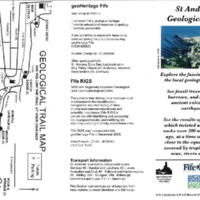 St Andrews Geological Trail
Geological field guide to St Andrews.
The Rock and Spindle is an ancient volcanic vent, and it has an excellent example of radial columnar jointing (it looks like spokes of a wheel) due to…
Kingsbarns has a variety of different fossils including 330 million year old millipede tracks. There are also fossilised shells and the imprints of…
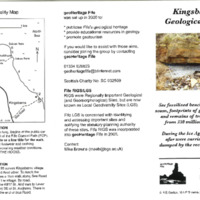 Kingsbarns Geological Trail
Geological field guide to Kingsbarns Beach.
 Arthropleura Tracks
Kincaple East raised beaches
 kincaple OSL sampling
Tim Kinnaird OSL sampling
St Fort disused sand and gravel quarry on the Wormit esker.
 Esker St Fort
Aerial view of the esker at St Fort
 St Fort Quarry
Aerial view of St Fort sand and gravel quarry
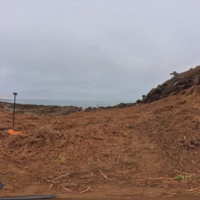 Kinkell Raised Beach 3
360 photosphere on the 4m raised beach to east of Kinkell Braes
 Kingcraig
Kincraig Point raised beach platforms
 Electromagnetic Survey
Conducting electromagnetic surveying on the raised beaches at Kingcraig using a Geonics EM38
 Raised beach platforms, Kingcraig
Overview of raised beach platforms at Kingcraig near Elie, Fife
 Sampling Platforms, Kingcraig
Sampling the platform sections at Kingcraig point for OSL dating
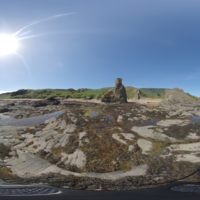 Rock and Spindle
The Rock and Spindle geological site
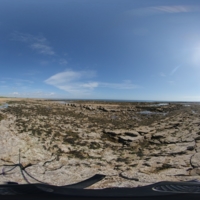 Kingsbarns Beach
Early Christian hand-bell formerly kept and used in St Fillan’s Church, Struan (near Blair Atholl), Perthshire, and possibly associated with that…
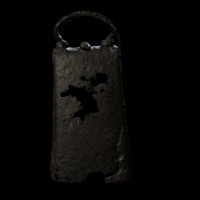 St Fillan's Bell
 Culross
 (/ˈkurəs/) (Scottish Gaelic: Cuileann Ros, 'holly point or promontory') is a village and former royal burgh, and parish, in Fife, Scotland.
 Culross Abbey (Parish Church), Fife
 Inverkeithing
 (/ˌɪnvərˈkiːðɪŋ/ Scottish Gaelic: Inbhir Chèitinn) is a port town and parish, in Fife, Scotland, on the Firth of Forth. According to…
 Inverkeithing Friary, Inverkeithing
Inverkeithing Friary, Queen Street, Inverkeithing, Fife, Scotland
 Burntisland
 (/bɜːrntˈaɪlənd/, Scots: Bruntisland) is a former royal burgh and parish in Fife, Scotland, on the northern shore of the Firth of Forth.…
 Burntisland Parish Kirk
Dating from 1592, St. Columba's is the oldest pre-Reformation kirk still in use. In 1601, it was the venue of the General Assembly, held in the…
 Aberdour
 (/ˌæbərˈdaʊər/ (About this soundlisten); Scots: Aiberdour,[2] Scottish Gaelic: Obar Dobhair) is a scenic and historic village on the south…
 St Fillan's Church 20100930 from the south
St Fillan's Church, Aberdour, Fife, Scotland. View from the south.
 Dysart
 (/ˈdaɪzərt/ Scottish Gaelic: Dìseart) is a former town and royal burgh located on the south-east coast between Kirkcaldy and West Wemyss in…
 St Serf's Church, Dysart
Dysart, Panhall, Shore Road, St Serf's Church
 Methil
 (Scottish Gaelic: Meadhchill)[2] is an eastern coastal town in Scotland. It was first recorded as "Methkil" in 1207, and belonged to the Bishop…
 Pre-Ref Methil Church
The site of the pre-Reformation Methil Parish Church, now part of Methilmill Cemetery.
 St Monans
 (/ˈmoʊnənz/ (About this soundlisten), locally /ˈsɪmənənz/ (About this soundlisten)),[1] sometimes spelt St Monance, is a village and parish…
 St. Monans Parish Church, Fife
 Pittenweem
 (/ˌpɪtənˈwiːm/) is a fishing village and civil parish in Fife, on the east coast of Scotland. At the 2001 census, it had a population of…
 Pittenweem Parish Church and Tolbooth
 Anstruther
 /ˈænstrəðər/ (Locally Ainster /ˈɛnstər/ Scottish Gaelic: Ànsruthair) is a small coastal resort town in Fife, Scotland, situated on the…
 Kirk, Anstruther Wester
 This fine old Kirk is now rather dilapidated and shored up in places. I suppose it's not in bad shape for something that has…
 Crail
Crail Scottish Gaelic: (Cathair Aile) is a former royal burgh, parish and community council area (Royal Burgh of Crail and District) in the East Neuk…
 Crail Parish Church in early September
. This is a photo of listed building number 23244.
 St Andrews
 (Latin: S. Andrea(s); Scots: Saunt Aundraes; Scottish Gaelic: Cill Rìmhinn) is a town on the east coast of Fife in Scotland, 10 miles (16…
 St Andrews
 Leuchars
 (pronounced /ˈluːxərs/ (About this soundlisten) or /ˈluːkərz/; Scottish Gaelic: Luachar "rushes") is a small town and parish near the…
 St. Athernase Church, Leuchars, Fife, Scotland